

Queclink GL601CAU
The Queclink GL601CAU is a solar-rechargeable LTE Cat 1 asset tracker for the Americas with up to 10-year standby, 12,000mAh battery, BLE 5.0, WiFi, and multi-constellation GNSS — providing long-term maintenance-free tracking for containers, trailers, and rail wagons across Latin America.
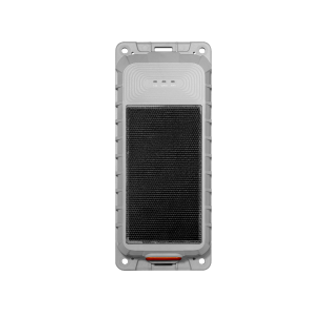
Queclink GL601CAU — Solar LTE Cat 1 Asset Tracker for Latin America with 10-Year Standby
The Queclink GL601CAU is a solar-powered LTE Cat 1 asset tracker configured for operation across Latin America and North America. Purpose-built for long-term deployment on non-powered assets such as trailers, shipping containers, and heavy equipment, it pairs a large solar panel with an internal battery to deliver up to 10 years of standby life without manual intervention.
Key Features
Solar harvesting technology enabling up to 10-year maintenance-free operation
LTE Cat 1 FDD with WCDMA fallback for comprehensive Americas network coverage
Massive 12,000mAh rechargeable battery bank (6×ICR18500 cells)
Multi-constellation GNSS — GPS, BeiDou, GLONASS, Galileo — with <2.5m CEP
IP67 waterproof rating for rugged outdoor deployment
BLE 5.0 for wireless configuration and short-range data transfer
WiFi for indoor positioning and local network connectivity
Temperature monitoring for cold chain and cargo condition tracking
Tamper detection and light sensor for comprehensive security alerting
Magnetic and screw mounting with security steel cable for flexible installation
Technical Specifications
Cellular Connectivity
LTE Cat 1 FDD: B2/B3/B4/B5/B7/B8/B28/B66
WCDMA: B2/B3/B5/B8
GNSS
Constellations: GPS, BeiDou, GLONASS, Galileo
Position Accuracy: <2.5m CEP
Physical
Dimensions: 212×86×30mm
Weight: 572g
Protection: IP67
Operating Temperature: -20°C to +70°C
Power
Battery: 6×ICR18500 Li-ion, 12,000mAh total
Solar recharging (integrated solar panel)
Standby: Up to 10 years (solar recharged, 1 report/day) / Up to 5 years (no solar, 1 report/day)
Wireless
BLE 5.0 (internal antenna)
WiFi (internal antenna)
Sensors
Temperature sensor
Tamper detection
Light sensor
Mounting
Screw mounting / Magnet mounting + security steel cable
Region & Certification
Region: Latin America (LATAM)
Certificate: FCC (Planning)
Typical Use Cases
Latin American Container Fleet Tracking: Deploy across South and Central American container fleets with solar recharging eliminating battery maintenance in regions with high solar availability.
North America Intermodal Rail: Track freight containers moving across North American intermodal rail networks with CAU band compatibility covering US and Canadian LTE networks.
Amazon Basin and Remote Area Assets: Solar recharging is particularly effective in high-irradiance tropical regions, enabling extended standby even at higher reporting rates.
Cross-Border Mexico-US-Canada Freight: Monitor trailers and containers crossing USMCA freight corridors with LTE Cat 1 coverage across all three countries.
Brazilian Agribusiness Equipment: Track agricultural trailers and equipment across Brazil's vast farming interior with multi-year maintenance-free operation.
Port of Santos and Callao Container Monitoring: Use WiFi positioning for accuracy in GNSS-challenged port environments across Latin America's major container terminals.
Cold Chain Monitoring: The integrated temperature sensor supports refrigerated container monitoring for pharmaceutical, food, and chemical cargo across the Americas supply chain.
Oil and Gas Equipment Tracking: Monitor equipment and containers across remote Latin American oil and gas extraction sites where power infrastructure is absent.
Mining and Heavy Industries: Track heavy plant and equipment across Chile, Peru, and Colombian mining operations with tamper alerts protecting high-value assets.
Humanitarian Logistics and Aid: Track supplies and equipment containers across Latin American disaster relief and humanitarian operations where infrastructure is disrupted.
Frequently Asked Questions
What is the difference between GL601CAU, GL601CEU, and GL601MG?
All three share the same hardware platform and solar battery system. The CAU is configured for Latin America with LTE Cat 1 bands B2/B3/B4/B5/B7/B8/B28/B66 and WCDMA B2/B3/B5/B8. The CEU covers EMEA with LTE Cat 1 B1/B3/B7/B8/B20/B28 and WCDMA B1/B8. The MG uses LTE Cat M1/NB2 for global IoT network compatibility. Choose based on your deployment region and network requirements.
How long does the GL601CAU operate without solar charging?
Without solar input, the 12,000mAh battery supports up to 5 years of standby at 1 report per day. Solar charging extends this to an effective 10 years of maintenance-free operation under normal exposure conditions.
Is the GL601CAU FCC certified?
FCC certification is in planning. Please contact us for the latest certification status before deploying in FCC-regulated markets.
Can the GL601CAU operate in the high heat of tropical Latin America?
Yes — the GL601CAU is rated to +70°C which covers the most extreme ambient temperatures encountered across tropical Latin America and desert regions. The IP67 housing also protects against humidity and rain in tropical environments.
What does the light sensor in the GL601CAU detect?
The light sensor detects sudden changes in ambient light, which typically indicates a container door being opened or a cover being removed from the device. This provides an additional security alert layer alongside the tamper detection, helping operators identify unauthorised access events even without GPS movement data.
Do you hold UK stock of the GL601CAU and do you ship worldwide?
Contact Tracking Hardware UK to confirm current stock, dispatch time and a delivered quote for your quantity and destination. We supply B2B customers internationally.