


M2M SIM Cards for GPS Trackers: UK Fleet Telematics SIM Guide

Updated: 1 day ago
GPS trackers are only reliable if the SIM and network setup are right. This guide explains M2M SIM cards, roaming, coverage and data requirements for Teltonika, Queclink and mixed fleet tracking deployments.
The SIM card is usually the last thing anyone thinks about when specifying a GPS tracker, and the first thing that stops a deployment working. A tracker with no working data connection is an expensive piece of plastic behind a dashboard. This guide covers what a SIM card for a GPS tracker actually needs to do, why an ordinary phone SIM is the wrong tool, and what changes when you deploy outside the UK.
Why a Consumer SIM Is the Wrong Choice
A standard pay-as-you-go phone SIM will often connect a tracker, which is exactly why fleets try it. The problems appear later. Consumer SIMs are tied to a single network, so a vehicle parked in a spot with poor coverage from that one operator simply stops reporting. They are usually deactivated after a period without a voice call or top-up, which is a problem for an asset tracker that only wakes twice a day. And they give you no central way to see which SIM is in which vehicle, no usage visibility, and no way to suspend or swap a line remotely across a fleet.
For one or two vehicles you can live with that. Across fifty, the administration alone costs more than the SIMs.
What an IoT SIM Does Differently
An IoT or M2M SIM is built for unattended devices rather than people. The IoT SIMs we supply carry a roaming bundle covering 180 countries, support 2G, 3G, 4G and LTE Cat-M1, and come with full management and visibility across every line you hold. That last point matters more than most buyers expect: being able to see, manage and remotely control SIMs without physically visiting the vehicle is the difference between a fleet you can run and one you cannot.
They also include protections a consumer SIM has no concept of — an embedded secure element, plus signalling and IP firewalls to keep the device from being reached by anything it should not be talking to. And they come in multiple form factors, so the same connectivity fits whichever device you are installing.
Matching the SIM to the Tracker
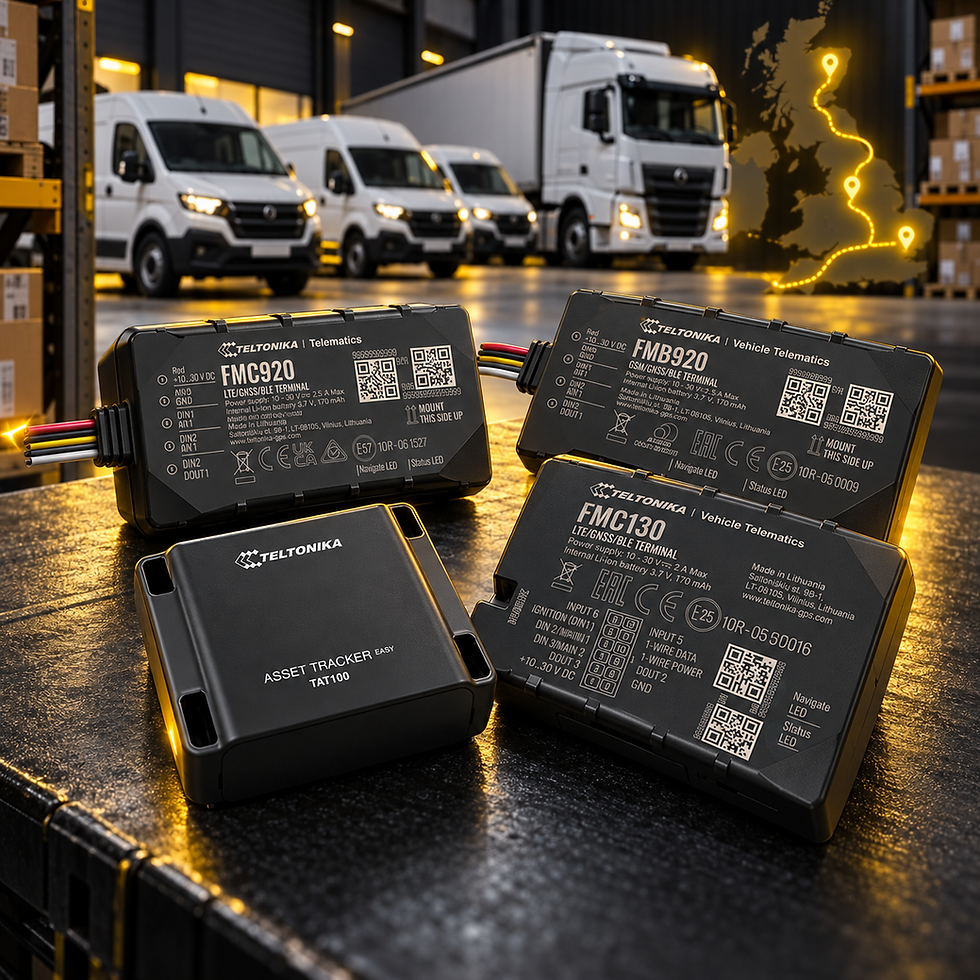
The SIM has to match what the hardware's modem supports. A 2G device such as the Teltonika FMB920 needs 2G service available where it operates. A 4G device like the Teltonika FMC920 or the FMC130 will use LTE where it exists and fall back where it does not. Battery-powered asset trackers are different again — the Queclink GV620MG uses LTE Cat M1, a low-power standard designed for devices that must run for months on a battery rather than stream data.
Cat-M1 coverage is not identical to ordinary 4G coverage, so it is worth confirming support in the specific countries you are deploying to before ordering in volume. Our full Teltonika 4G tracker guide covers which series sits where.
How Much Data Does a Tracker Actually Use?
Less than people assume, but the figure is entirely driven by how you configure the device rather than by the device itself. The things that move it are the reporting interval, how much the vehicle moves, whether you are pulling CAN bus parameters alongside position, and whether the tracker is sending images or video. A position-only tracker reporting every few minutes sits at the very low end. A video telematics unit uploading footage is in a different category altogether.
Because of that spread, it is worth sizing a bundle against your actual configuration rather than a generic per-device figure. Send us the reporting interval and what data you intend to collect and we can size it properly — there are no hidden charges to work around.
Deploying Outside the UK
This is where consumer SIMs fail most visibly. A UK phone SIM taken abroad is subject to roaming rules, fair-use caps and, in some markets, permanent roaming restrictions that cut the line off after a set period. For fleets operating across Europe, Africa or further afield, a properly provisioned roaming IoT SIM avoids that whole class of problem, and multi-network access means the device attaches to whichever operator is strongest at that location rather than failing on one.
Where there is genuinely no cellular coverage at all — remote sites, maritime, long-haul across sparse regions — cellular is the wrong answer entirely and you want satellite tracking instead.
Getting the Right SIM for Your Deployment
Tracking Hardware UK supplies IoT SIMs alongside the hardware, so the tracker and the connectivity arrive matched and pre-configured rather than as two separate procurement problems. Browse the IoT SIM options, the full GPS tracker range and our asset trackers, or contact the team with your deployment details for a quote.
All devices we supply are fully unlocked and not tied to any specific telematics platform or fleet management software. You are free to use them with any compatible platform.
Further Reading
If you found this useful, these related guides may also help: How to Choose a Vehicle Tracker Supplier in the UK — Teltonika 4G Trackers: The Complete Guide — Iridium Satellite vs Cellular GPS Tracking.
Recommended next reading for fleet buyers
For live commercial options, start with our GPS tracker SIM cards page before specifying hardware.SIM choice should be matched to the tracker family, so pair this guide with the Teltonika 4G trackers guide and your intended installation type.
For roaming, multi-network and non-UK projects, the Africa fleet tracking guide gives the deployment context for SIM resilience, coverage and driver accountability.If you are buying Teltonika devices and SIMs together, use the Teltonika Distributor UK guide to keep hardware, SIM activation and support under one supplier.
SIM Planning for Tracker Deployments
The SIM card should be chosen with the tracker and territory in mind. A UK van fleet using Teltonika FMC920 has different needs from a remote asset project using Queclink devices or an Africa deployment with cross-border roaming.
For higher-value fleet projects, plan SIMs alongside Driver Identification, cold chain tracking, cargo theft prevention and African fleet tracking where network reliability can decide whether alerts arrive on time.
FAQ
Can any SIM card work in a GPS tracker?
Not reliably. GPS trackers need SIMs with the right data plan, roaming rules, network access, APN support and long-term management for fleet use.
Do international fleets need roaming SIMs?
Usually yes. Cross-border fleets should avoid single-network plans unless coverage is proven for every operating area and failover is not required.


Comments