

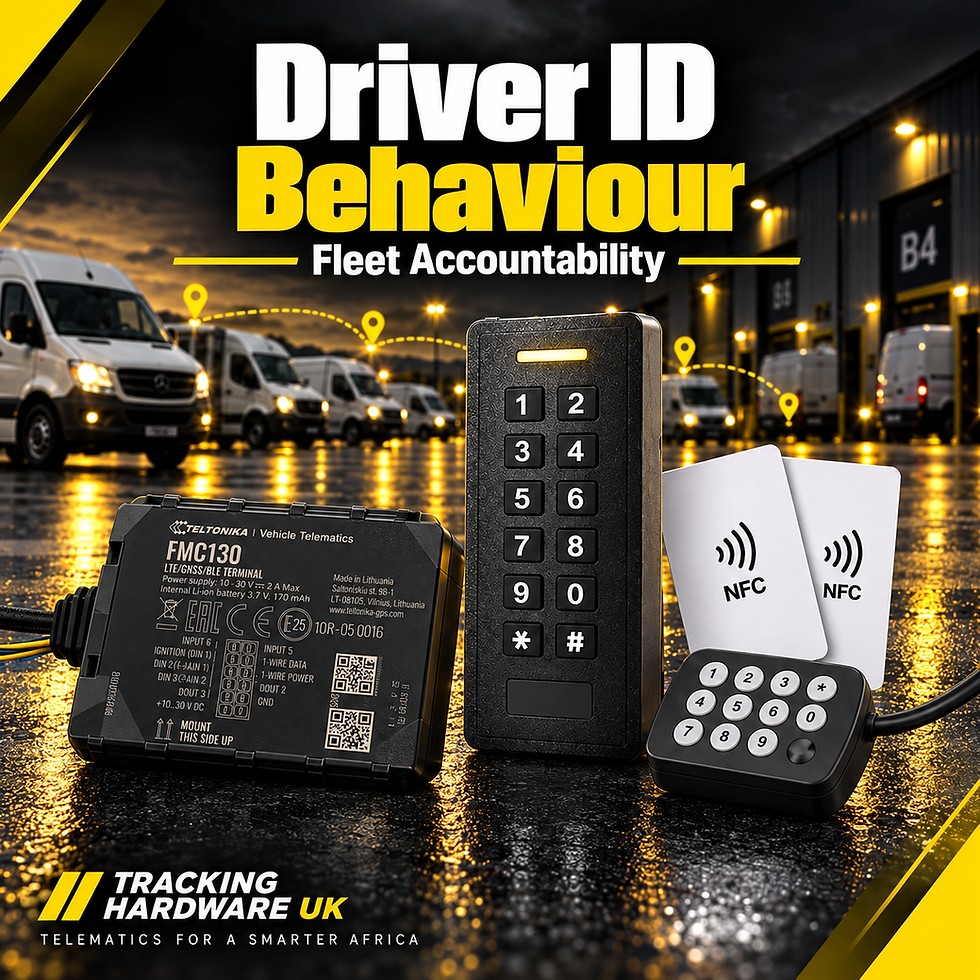
How Driver ID Keypads Improve Driver Behaviour in UK Fleets

Updated: Sep 8
Fleet managers across the UK face the same challenge: you can have the best route planning software, efficient vehicles, and a structured dispatch operation — but if you do not know exactly who is behind the wheel and how they are driving, you are operating blind. Driver behaviour is one of the biggest variables in fleet performance, directly affecting fuel costs, accident rates, vehicle wear, insurance premiums, and regulatory compliance. A driver identification keypad is the most direct solution to the accountability gap at the heart of most fleet operations.

What Is a Driver ID Keypad?
A driver identification keypad is a small PIN-entry device mounted inside each vehicle cab. Before starting a shift, the driver enters their unique PIN code. The keypad communicates with the vehicle's GPS tracker — such as the Teltonika FMB920 or FMC920, or a Queclink GV620MG — and logs the driver's identity against every subsequent telematics event: trips, speed, braking, idling, fuel use, and more. Every journey is now attributed to a named person, not just a vehicle registration.
1. Accountability Changes Behaviour Immediately
The most powerful effect of a driver identification keypad is immediate accountability. When drivers know that every speeding event, harsh brake, or rapid acceleration is logged against their name — not just a vehicle plate — behaviour improves without any further intervention. Anonymous driving encourages risk-taking. Identified driving does not. Fleet managers who deploy driver ID keypads consistently report measurable drops in fuel consumption, harsh braking events, and speeding incidents within weeks of installation.
2. Per-Driver Telematics Makes Coaching Targeted and Fair
Without driver ID, your telematics tells you a van hit 78mph on the M6 last Tuesday. With driver ID, you know exactly which driver did it — and that they have done it six times this month, while another driver on the same route has not exceeded 65mph once. This makes coaching targeted and evidence-based rather than general and demoralising. Fleet managers can sit down with individual drivers, show them their own data, and have a structured conversation grounded in verifiable facts. Teltonika and Queclink trackers transmit driver ID data alongside every telematics event, giving your platform a complete per-driver picture.
3. Immobiliser Integration Prevents Unauthorised Vehicle Use
A driver identification keypad can be wired to a vehicle's immobiliser circuit so the engine will not start until a valid PIN is entered. This eliminates one of the most common causes of fleet incidents: vehicles being used outside working hours, by unauthorised drivers, or without management knowledge. If no valid driver ID is presented, the vehicle stays locked. This single feature alone can reduce out-of-hours vehicle misuse to zero.
4. Driver Scorecards and Fleet Performance Leagues
When every trip is attributed to a named driver, you can build meaningful scorecards across the entire fleet. These measure harsh braking, acceleration events, speeding, idling time, and fuel efficiency — all per driver, not per vehicle. Fleet managers use scorecards to run internal performance programmes: recognising top performers, identifying who needs support, and tracking improvement over time. The data is objective, consistent, and difficult to dispute, making it a far more effective management tool than subjective observation.
5. UK Working Time Directive Compliance
For fleets operating under UK Working Time Directive regulations, driver ID is essential. You need to know not just how long a vehicle was in use, but which specific driver was operating it and for how many hours. Without driver ID, this requires manual logbooks and significant administrative effort. With a PIN keypad, every login and logout is automatically timestamped and attributed to a named individual, creating a compliant, auditable record with zero manual input. This is particularly important for HGV operators and any fleet managing driver hours across shared vehicles.
6. Lower Fleet Insurance Premiums
Many UK fleet insurers now offer premium reductions to operators who can demonstrate active driver monitoring. Installing driver identification keypads — and showing that you act on the data — is evidence that your operation takes safety seriously. In the event of a claim, you can produce exact records of who was driving, what the telematics data showed, and what corrective action was taken. This level of documentation significantly reduces your exposure in disputed liability situations.
Which Driver ID Keypads Work with Teltonika and Queclink Trackers?
We stock a full range of driver identification keypads compatible with the most popular GPS tracker models in the UK market. Our keypads connect via the accessory port on Teltonika FMB, FMC, and FTM series devices, and on Queclink GV and GL series trackers. Weatherproof IP68 units, NFC-reader combination keypads, and BLE wireless models are all available from UK stock. Contact us to find the right keypad for your tracker model and fleet size.
All Teltonika and Queclink devices we supply are fully unlocked — not tied to any specific telematics platform or fleet management software. You are free to use them with any compatible platform.
Further Reading
If you found this article useful, these related guides may also help: Driver ID for UK Fleets: Know Who Is Driving — How Driver ID Keypads Help Manage Driver Behaviour — Fuel Monitoring with GPS Trackers.
If you are looking for a wireless driver identification option, Tracking Hardware UK also manufactures the Bluetooth BLE Driver Notification Keypad (NN21382). It connects wirelessly via Bluetooth Low Energy and is fully compatible with Teltonika and Queclink GPS trackers, with no additional wiring required — making it an ideal choice for retrofit installations or fleets that prefer a cable-free driver ID setup.
Related Hardware
Related hardware from UK stock: Driver identification systems and iButton readers.
Complete Driver Identification Kits Guide
This article is part of our driver identification content hub. For the full buying framework, hardware comparison and deployment checklist, read the complete Driver Identification Kits guide.

Comments